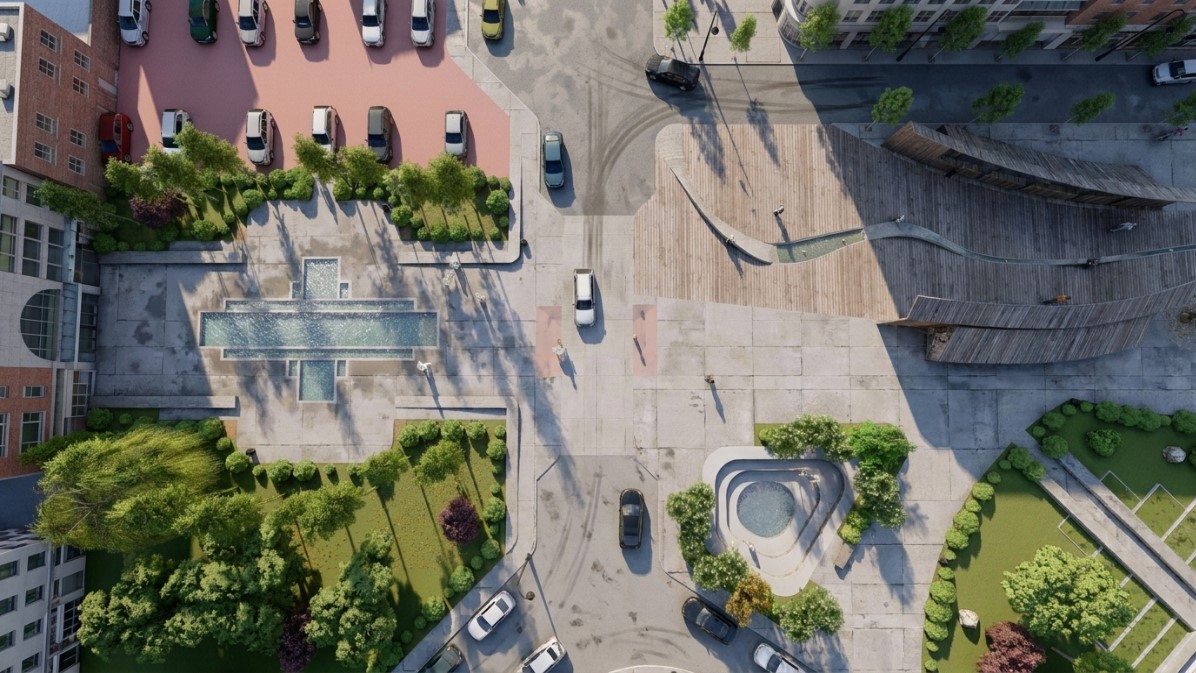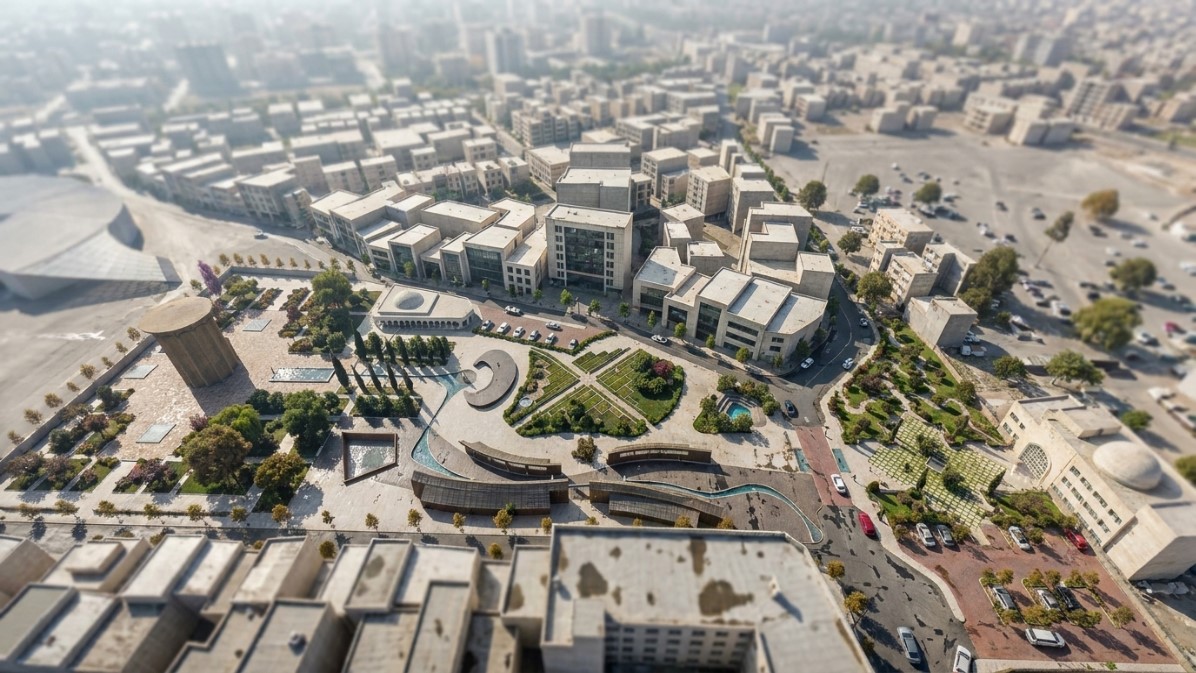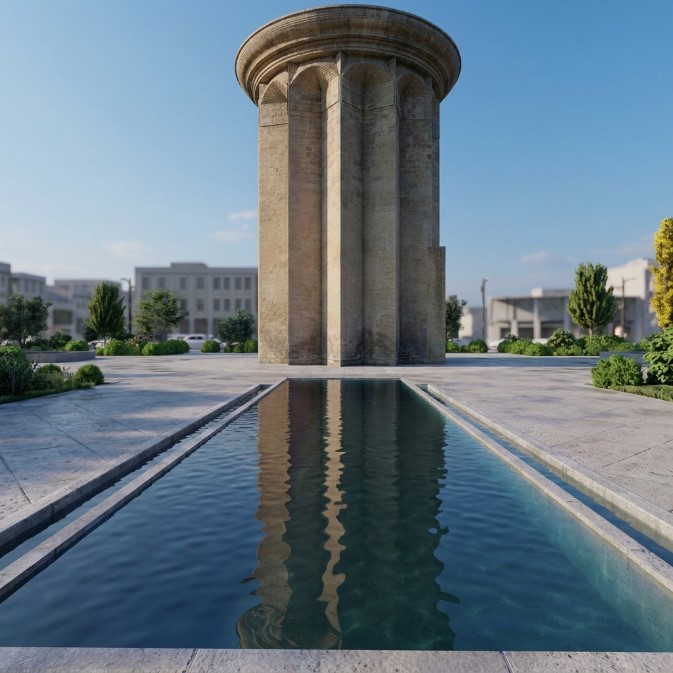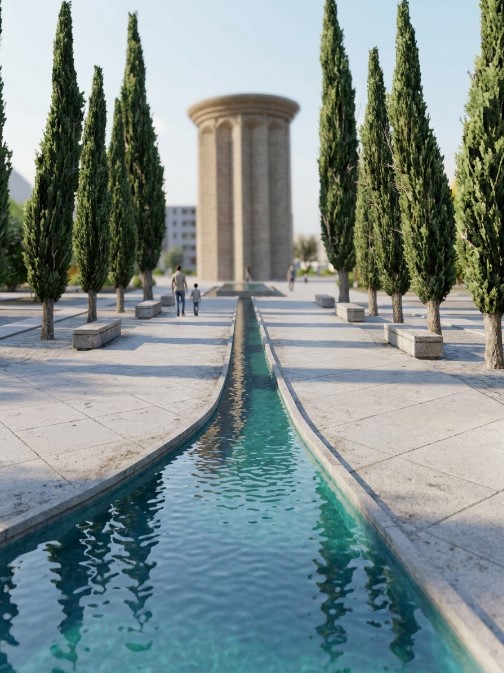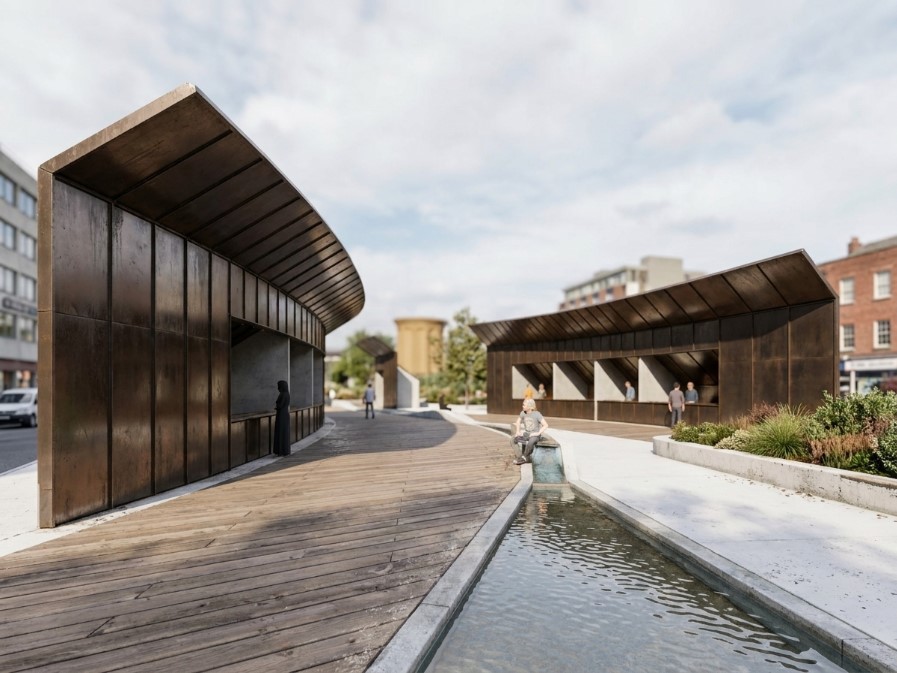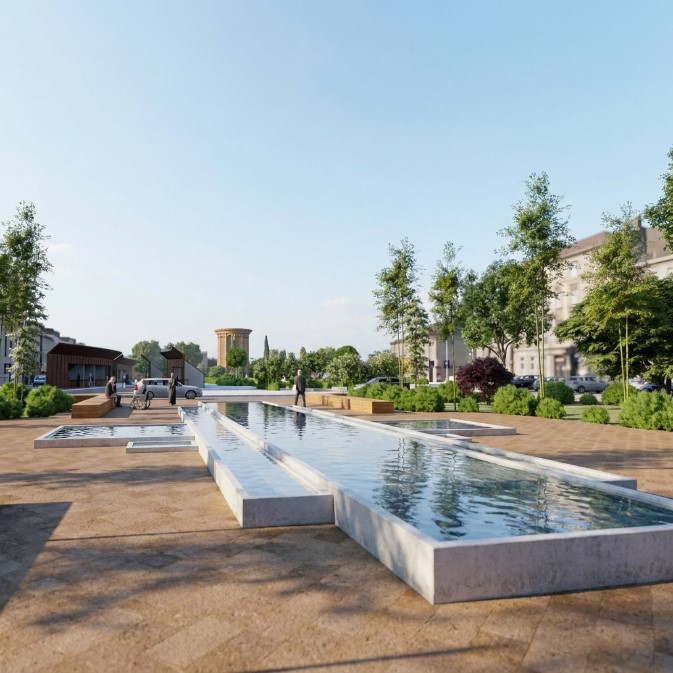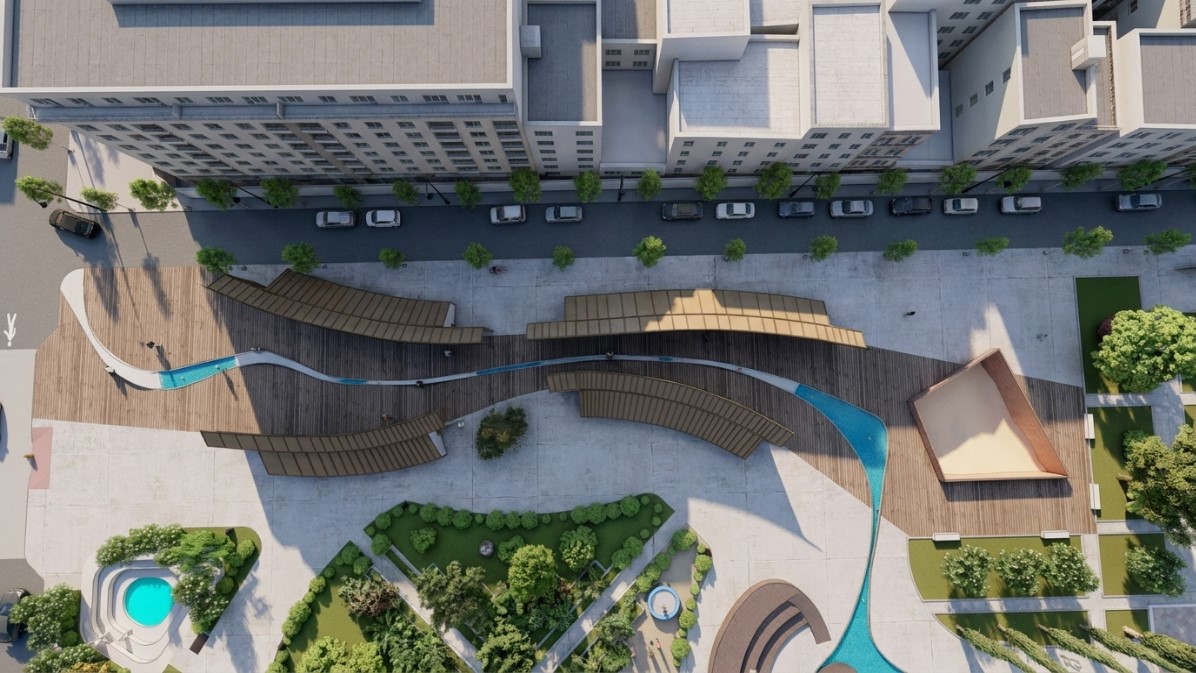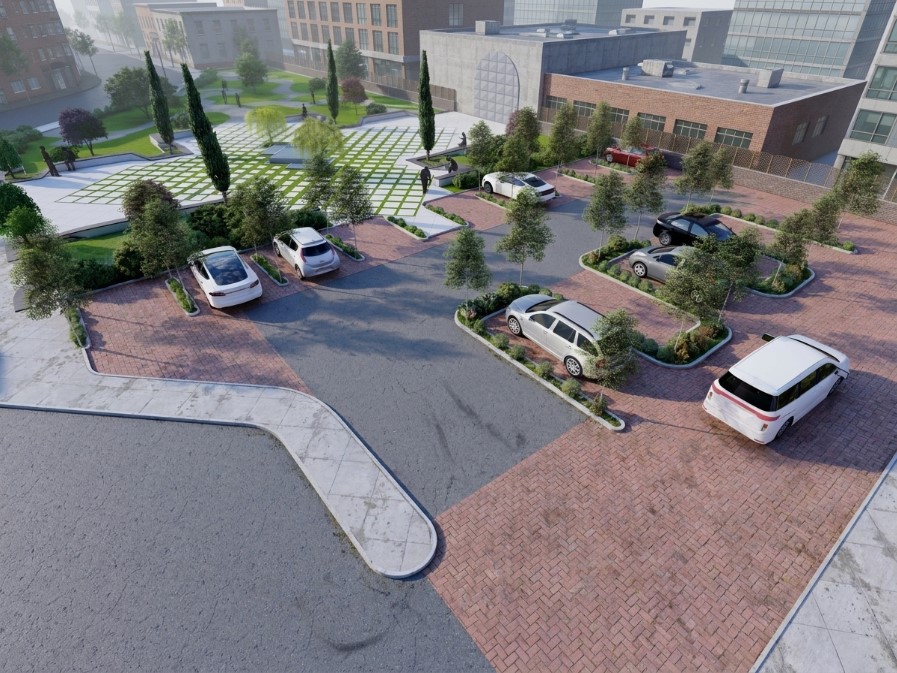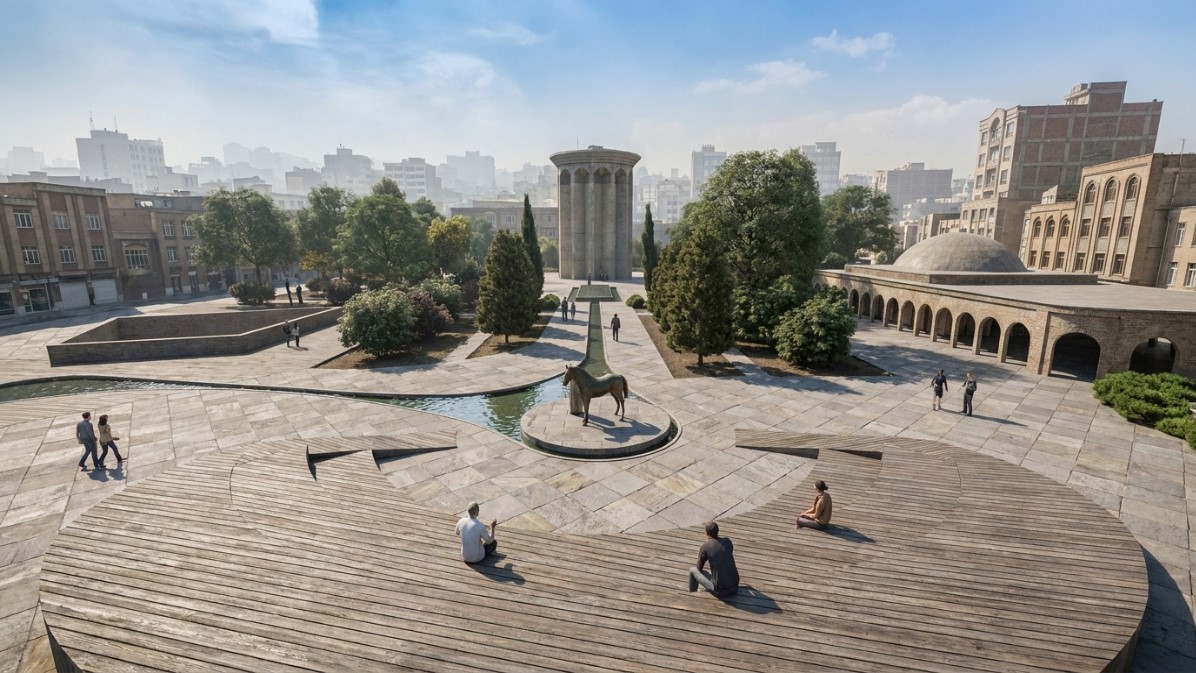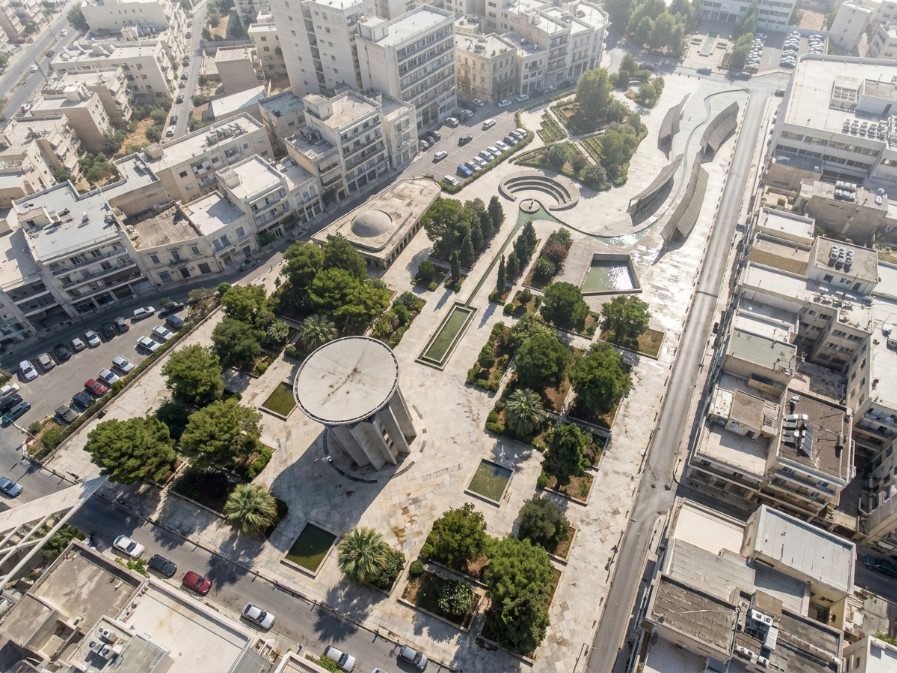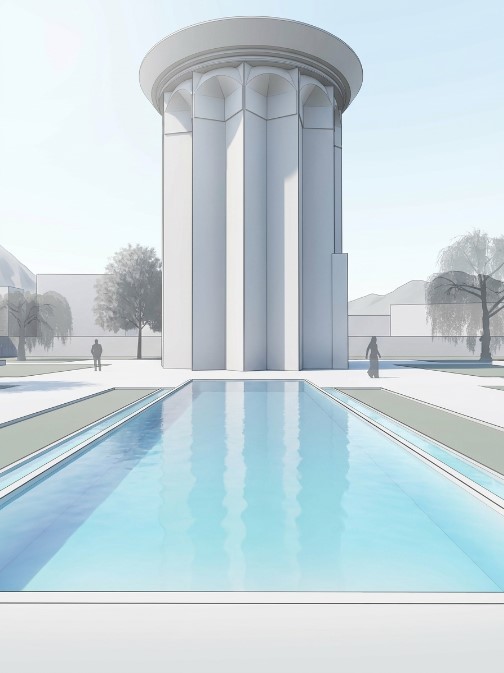

The redesign project of the Tughrul Tower precinct aims to redefine the relationship between historical heritage, urban space, and collective life. It is an architectural intervention that seeks to transform the periphery of this prominent monument from a mere marginal zone into an active, legible platform with high spatial quality.
The spatial organization is based on enhancing movement axes, defining a hierarchy of access, creating zones for pause and gathering, and reconfiguring green surfaces and open spaces. This approach ensures that the tower’s presence as the site’s primary focal point is firmly established in both urban perception and user experience.
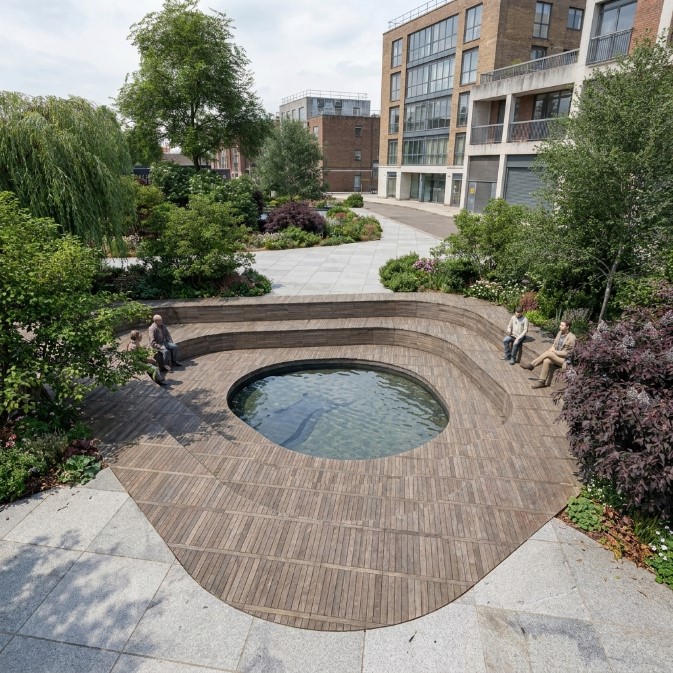
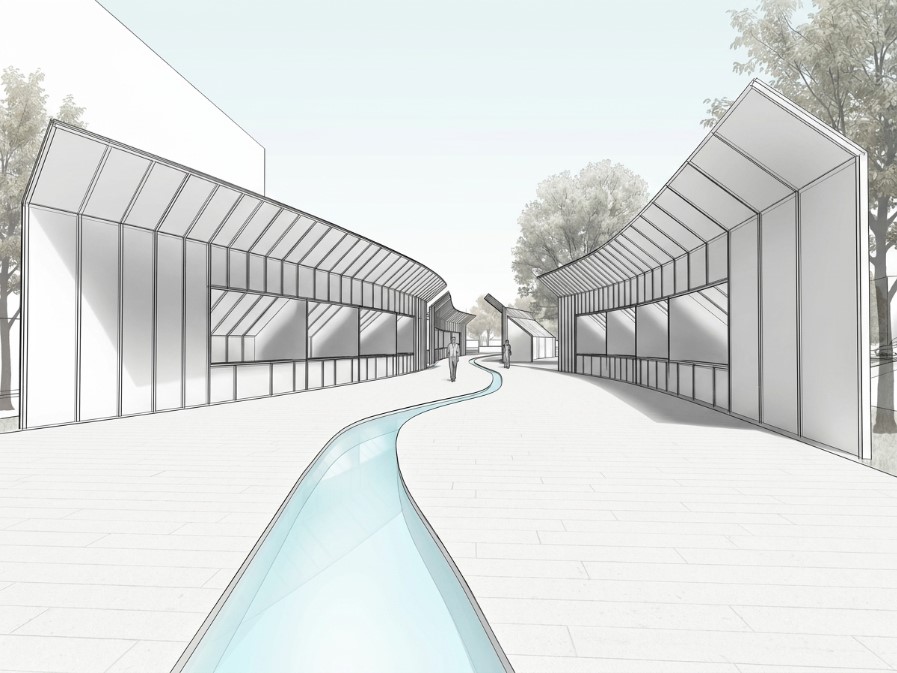
Throughout the project, the landscape, hardscape, water features, seating areas, and softscape (planting masses) are seamlessly integrated through a cohesive design logic. This integration elevates the environmental quality while fostering a context for interaction, reflection, and a re-reading of the site’s historical value. Ultimately, the redesign of the Tughrul Tower precinct is an endeavor to strike a balance among conservation, urban regeneration, and livability; redefining the site’s historical identity alongside the contemporary needs of public space into a continuous, human-scaled, and enduring spatial experience.