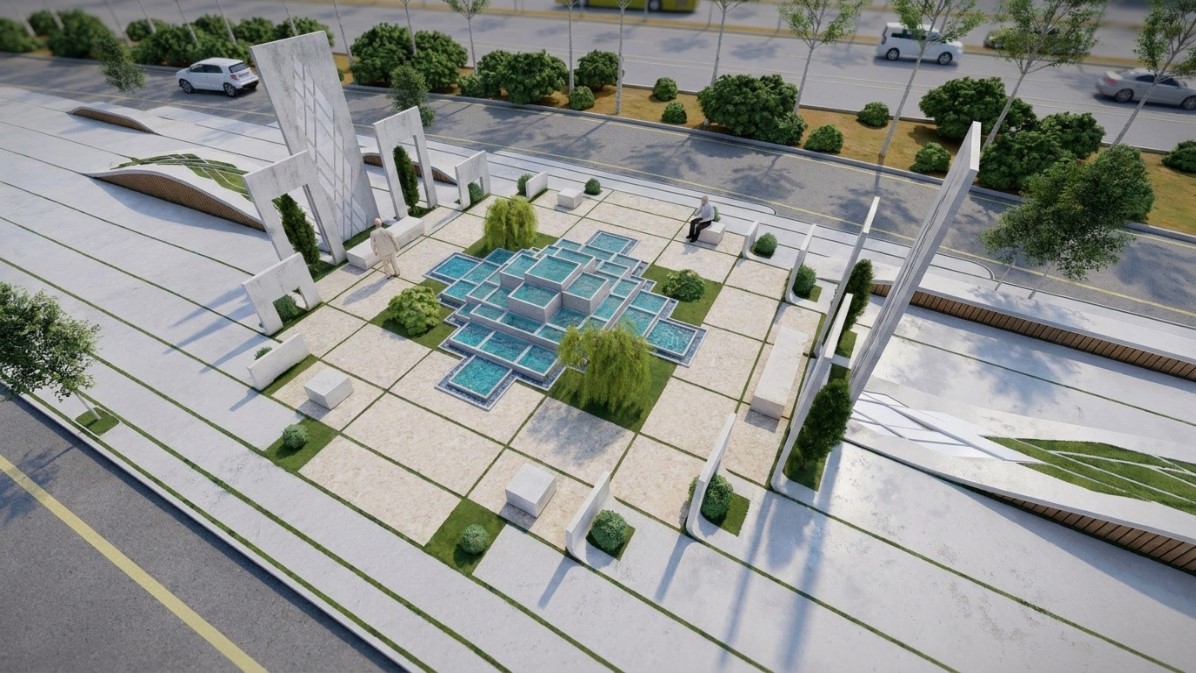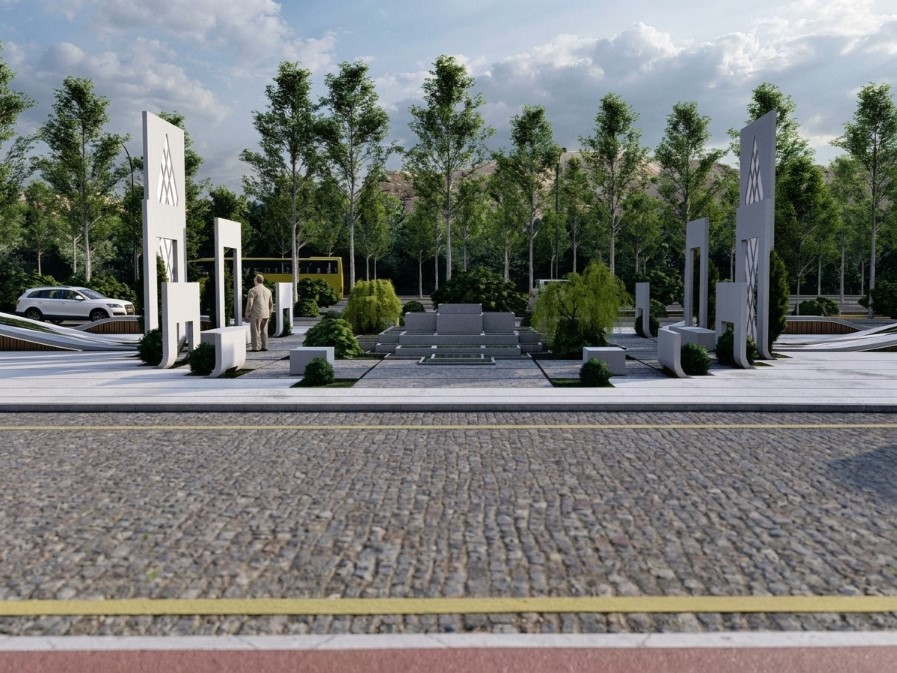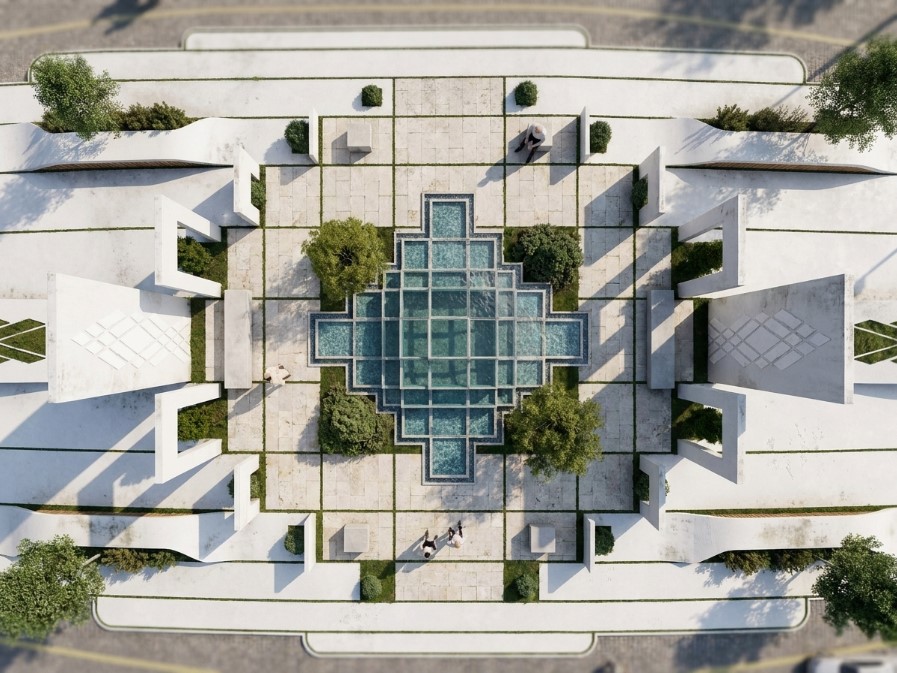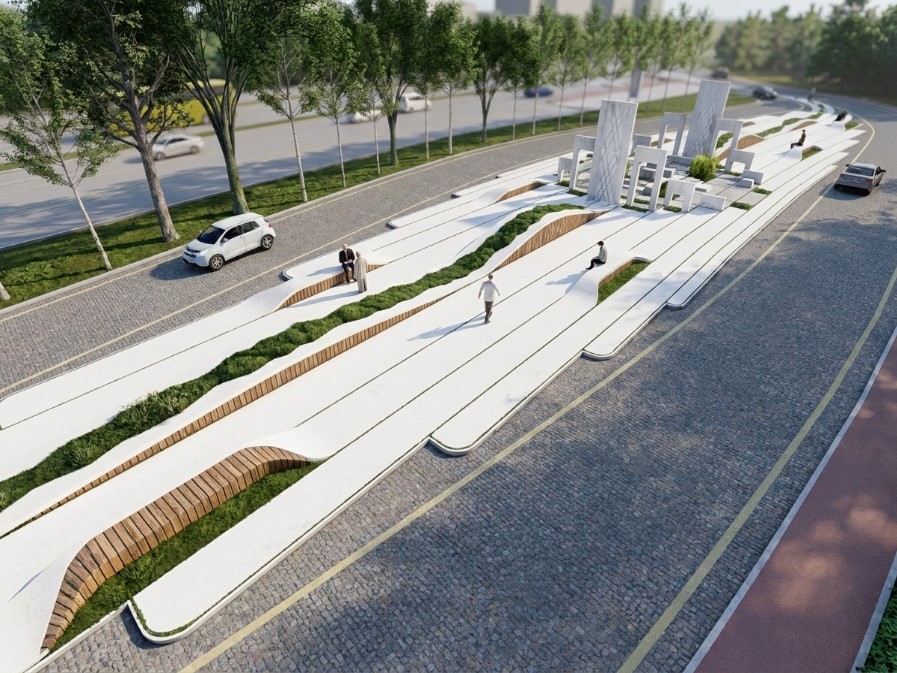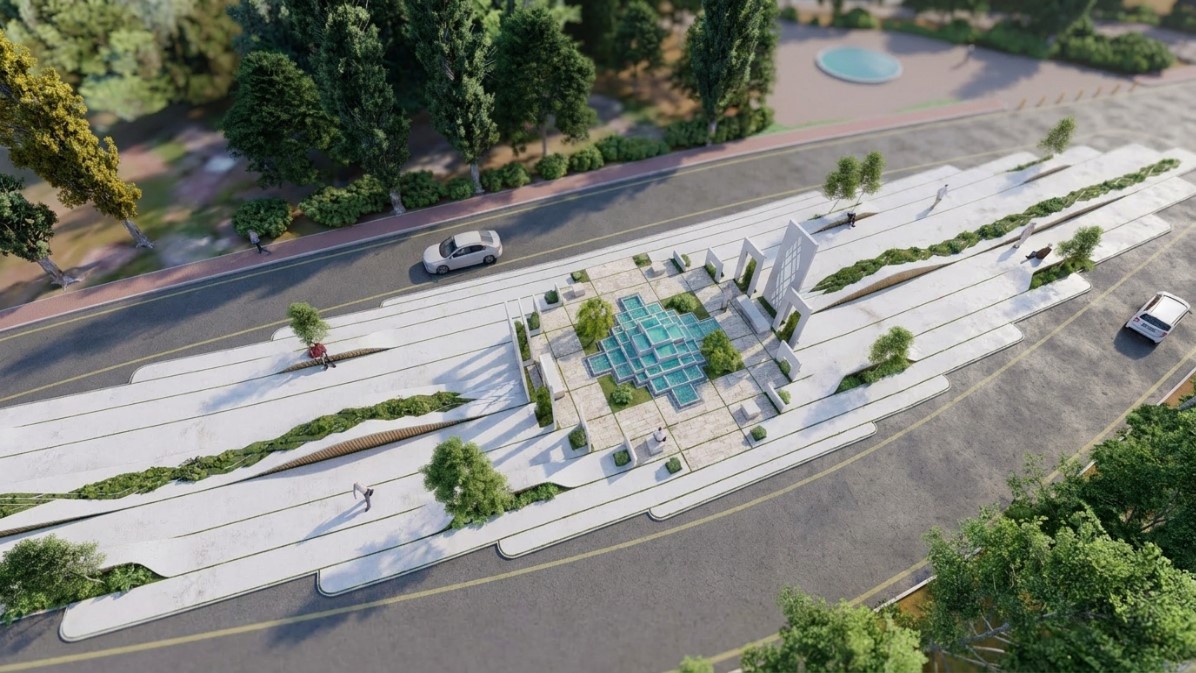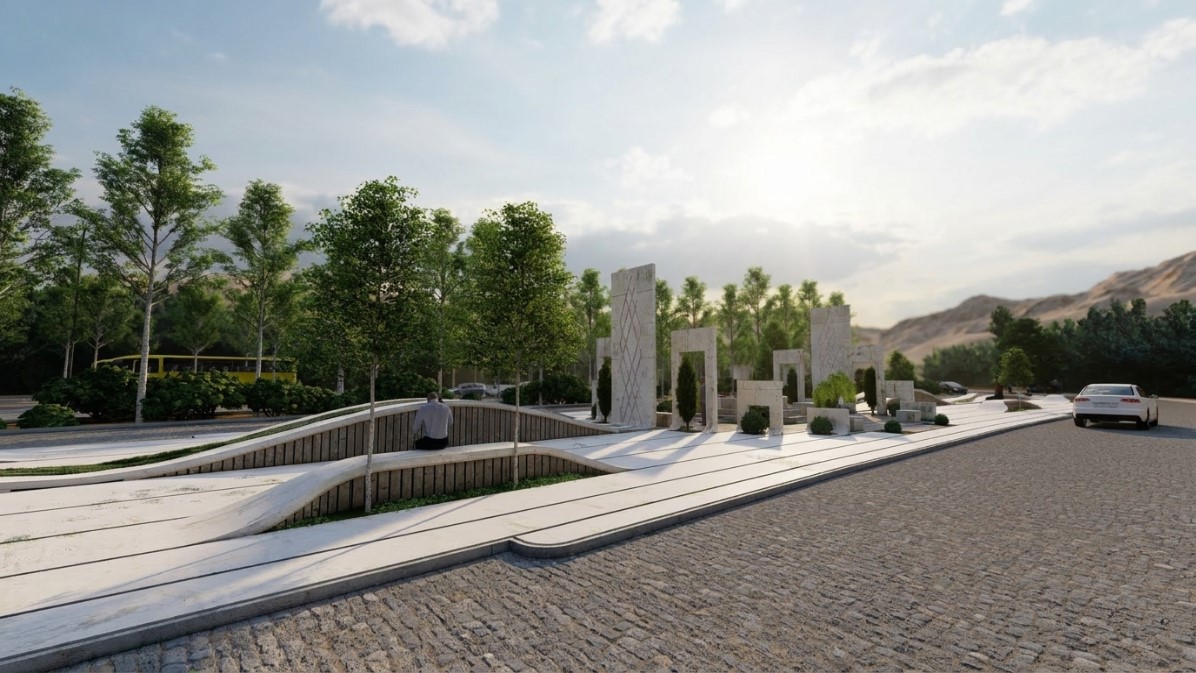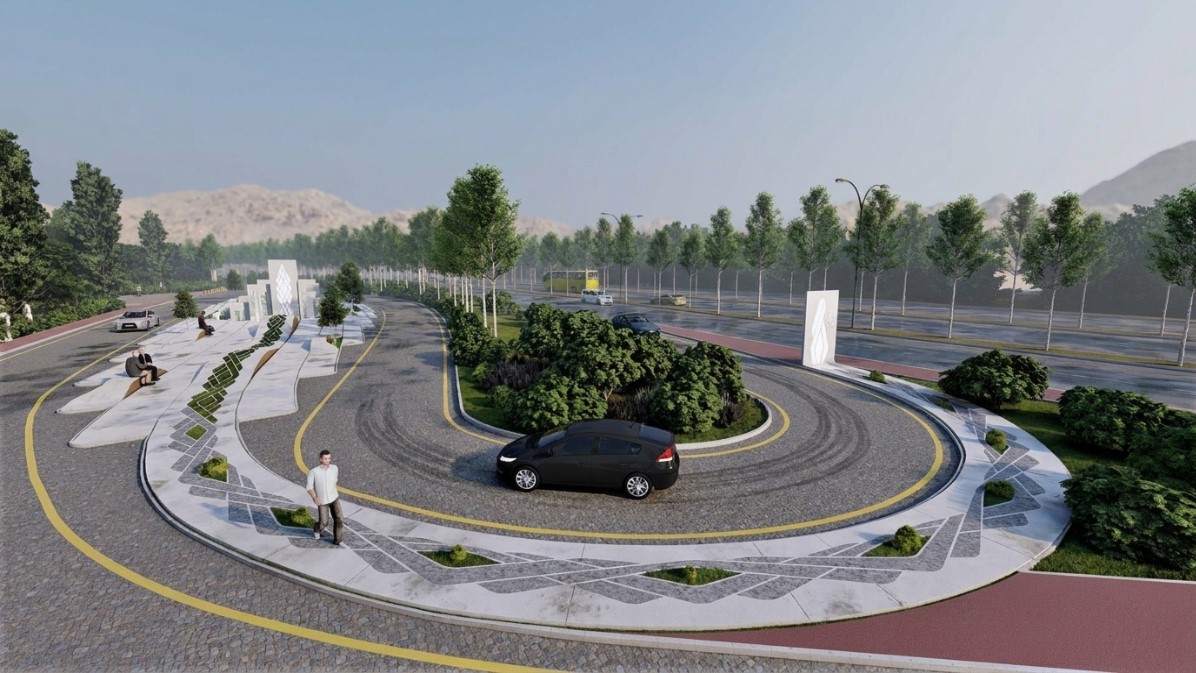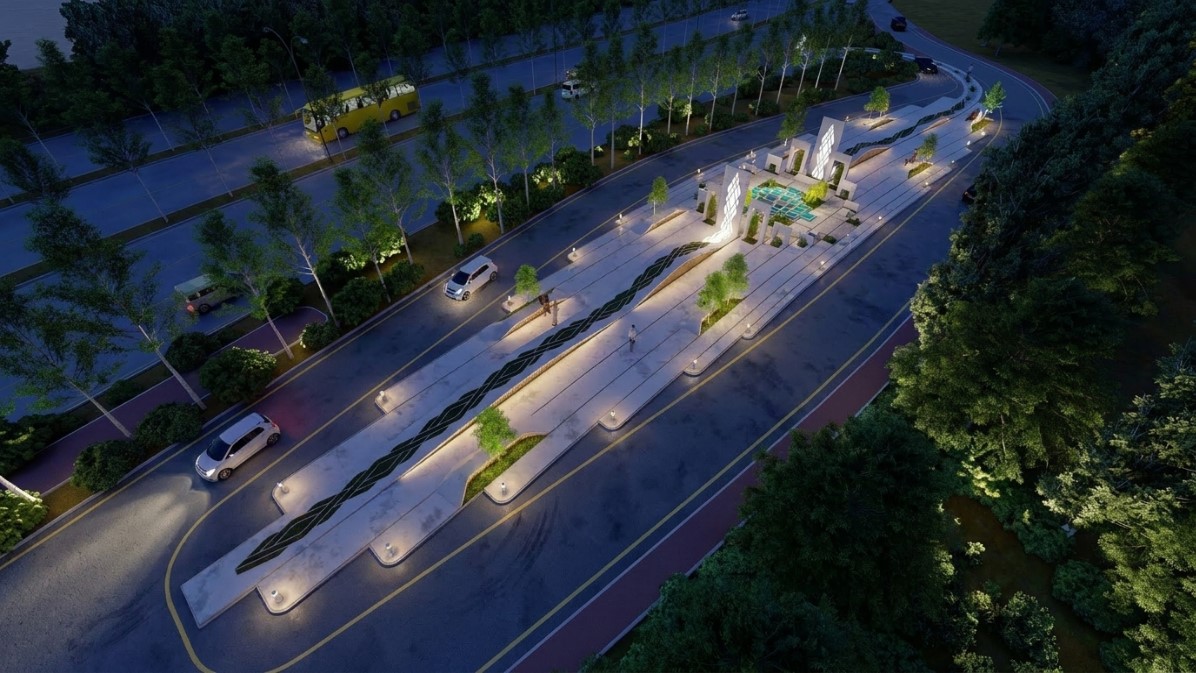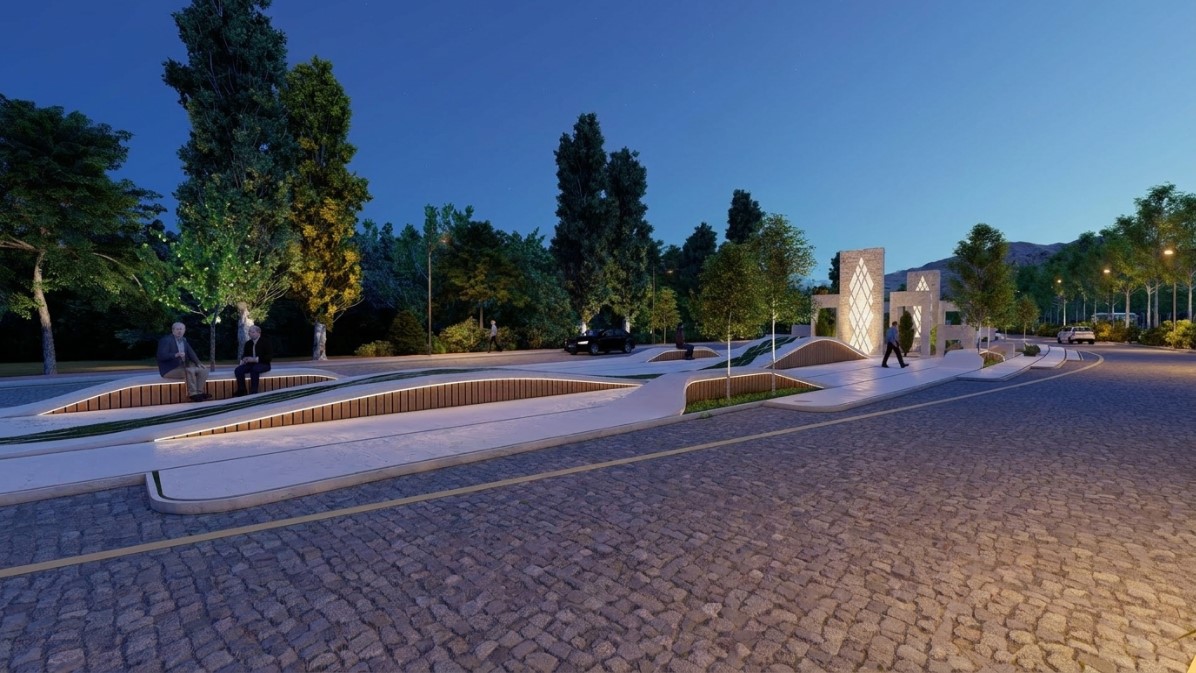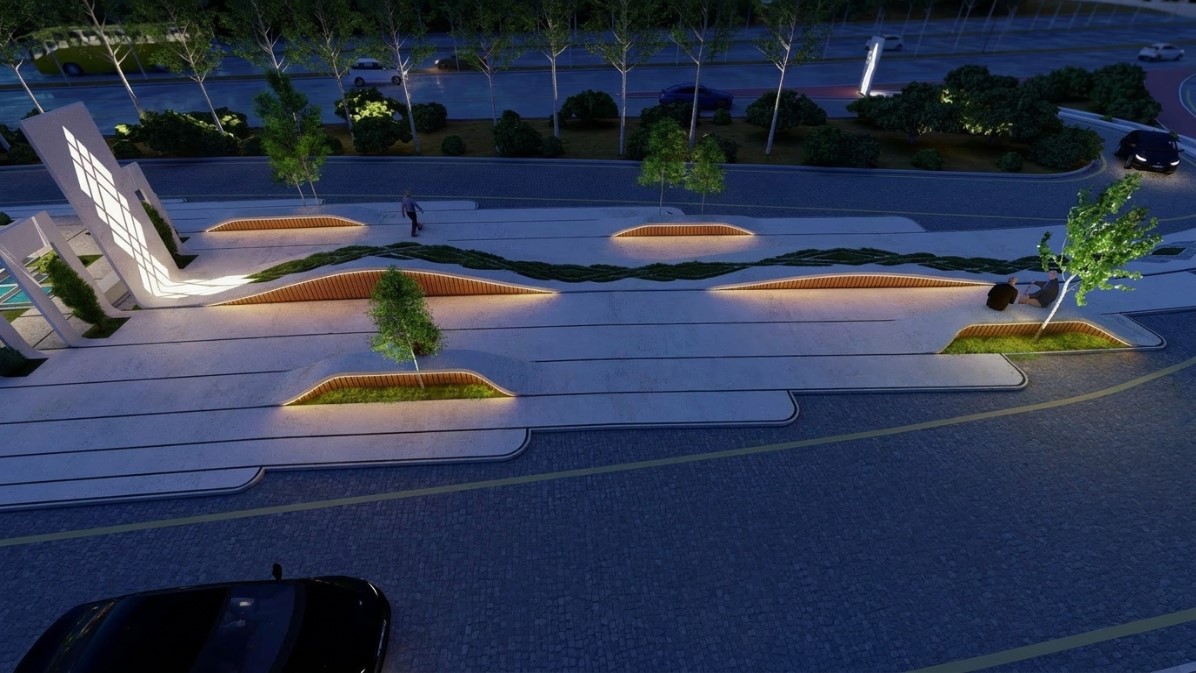

The Karaj Park-Rood Landscape project is designed to qualitatively enhance a linear urban space and redefine the relationship between movement, pause, and the surrounding landscape. By relying on the precise organization of pedestrian pathways, the definition of diverse functional layers, the strategic placement of seating areas, climate-responsive planting, and the integration of unified lighting, the design strives to provide an active, legible, and sustainable platform for civic presence.
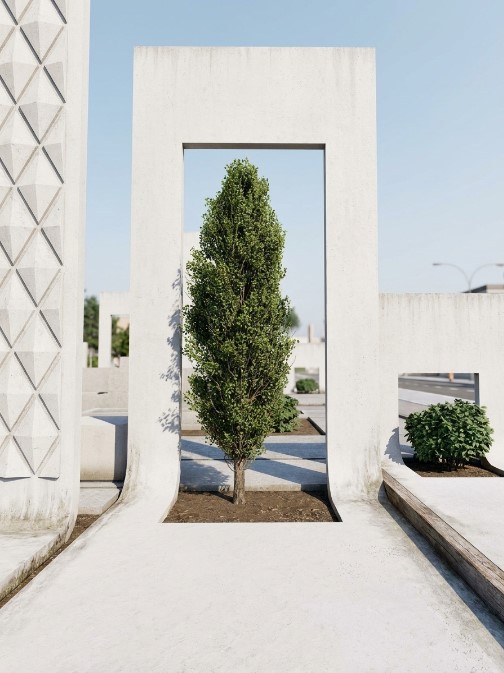
Fluid and continuous forms serve as the primary design language; while guiding circulation and creating spatial sequences, they enable a multifaceted spatial experience at the human scale. Key design strategies include the interplay of hardscape materials with vegetation, the curation of views and sightlines, the establishment of soft boundaries between vehicular and pedestrian zones, and a strong emphasis on the quality of nocturnal perception.
Ultimately, the Karaj Park-Rood Landscape represents an endeavor to transform an urban context into a contemporary, functional, and identity-driven public realm that simultaneously addresses kinetic, social, environmental, and aesthetic needs.